
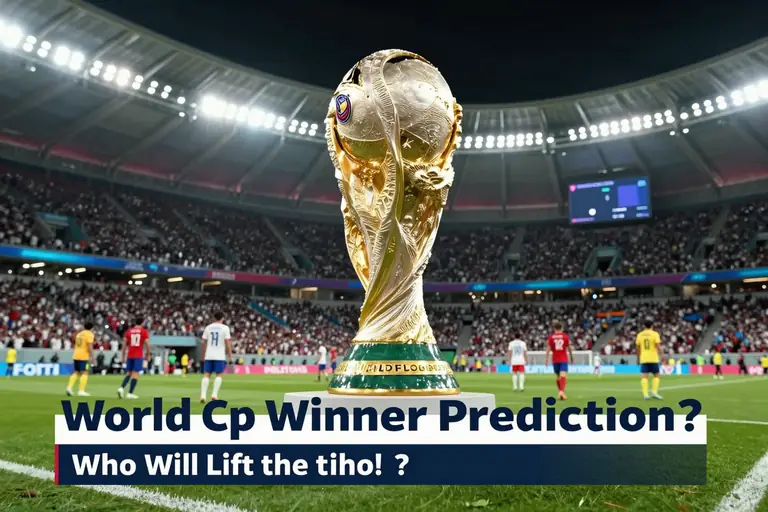
The Unpredictable Dance of Football: Making Your World Cup Winner Prediction
The FIFA World Cup is more than just a football tournament; it’s a global phenomenon, a month-long celebration of skill, passion, and often, heartbreak. Fans from every corner of the planet unite, or passionately disagree, over one central question: who will be the ultimate World Cup winner? For many, the joy comes not just from watching the games, but from the intricate dance of making a World Cup winner prediction. It’s about analyzing team forms, player performances, tactical approaches, and even a bit of good old-fashioned luck. This quadrennial event transcends mere sport, becoming a cultural touchstone that captivates billions, fostering debates, rivalries, and shared moments of exhilaration or despair.
Every four years, as the opening whistle draws near, the air buzzes with anticipation. Experts, pundits, and casual fans alike dive deep into statistics, historical data, and gut feelings to try and pinpoint the eventual champion. Is it the team with the most dazzling individual talent? The one with the most cohesive unit? Or perhaps the dark horse nobody saw coming? This article will explore the factors that go into a sound World Cup winner prediction, look at past trends, and consider some of the perennial favorites and potential surprises for the upcoming tournament. We’ll delve into the nuances that separate contenders from pretenders, examining how diverse elements converge to crown a champion and ultimately, the next World Cup winner.
Understanding the Dynamics of a World Cup Winner Prediction
Making an accurate World Cup winner prediction is notoriously difficult, and that’s precisely what makes it so exciting. Unlike league competitions where consistency over many months often prevails, the World Cup is a sprint. It’s a high-stakes, short-format tournament where every match is a final. A single bad day, a crucial injury, a moment of individual brilliance, or a controversial referee decision can derail even the strongest contenders. The pressure is immense, and only teams with exceptional mental fortitude can navigate the challenges. Here are some key elements to consider when trying to foresee the next World Cup winner:
- Squad Depth and Star Power: A team needs more than just eleven good players. The modern game, coupled with the intensity of a tournament format, necessitates a strong squad capable of rotating players without a significant drop in quality. Injuries, suspensions, and tactical changes demand a strong bench. However, the presence of a few truly world-class players who can turn a game on its head is often indispensable. Think of Messi for Argentina, Ronaldo for Portugal, or Mbappé for France. These individuals possess the unique ability to unlock defenses, create something from nothing, and elevate an entire team. Their clutch performances often play a pivotal role in a successful World Cup winner prediction, providing moments of magic that defy tactical analysis.
- Tactical Flexibility and Adaptability: Modern football demands adaptability. Gone are the days when a single, rigid system could guarantee success. Teams that can switch formations, adjust their pressing schemes, alter their attacking approach based on their opponent, and react to in-game situations are at a significant advantage. A rigid system, no matter how good, can be exploited by cunning opponents. The ability of a coach to identify weaknesses and strengths, both in their own team and their rivals, and adjust accordingly, is paramount. This tactical chess game often dictates the flow and outcome of crucial matches.
- Managerial Acumen and Leadership: The coach’s role cannot be overstated. They are the orchestrators, the motivators, and the strategists. Their ability to inspire a diverse group of players, manage egos, handle media pressure, make astute in-game adjustments, and keep the squad united through highs and lows is crucial. A great manager can often squeeze extra performance out of their squad, instill a winning mentality, and navigate the psychological minefield of a World Cup, directly impacting their chances of being the World Cup winner. Their leadership extends beyond the training pitch, shaping the team’s identity and resilience.
- Form Leading Up to the Tournament: While not the be-all and end-all, a team in good form arriving at the World Cup often carries momentum and confidence. A successful qualifying campaign, strong performances in warm-up friendlies, and a feeling of invincibility can be powerful psychological assets. Conversely, a team struggling with results, internal issues, or a string of injuries might find it hard to turn the tide once the tournament begins. However, it’s also true that some teams, like Spain in 2010, can start slowly and build momentum, demonstrating that form is a snapshot, not a destiny.
- Historical Performance and Pedigree: Certain nations have a rich history of World Cup success. Brazil, Germany, Italy, Argentina, France – these teams often carry a psychological edge and a winning mentality that can be hard to replicate. The weight of history, the experience of previous triumphs, and a deep-rooted footballing culture can provide an intangible advantage. This pedigree often factors into a World Cup winner prediction, as these nations are often expected to perform under pressure and have a track record of doing so. The knowledge of how to win, passed down through generations, is a powerful asset.
- The Draw and Path to the Final: Sometimes, the luck of the draw can be a major factor. A tough group stage followed by a gauntlet of strong opponents in the knockout rounds can deplete even the best teams, both physically and mentally. A slightly easier path, with fewer top-tier opponents in the early knockout stages, can conserve energy, allow for squad rotation, and build confidence, making the World Cup winner prediction a little easier for some teams. Avoiding early clashes with fellow favorites can be crucial for a deep run.
- Home Advantage (or lack thereof) and Environmental Factors: While not always decisive, playing on home soil or in a familiar continent can provide a boost. The crowd’s passionate support, reduced travel, and familiar climatic conditions can make a tangible difference. Conversely, teams traveling across multiple time zones and adapting to vastly different climates (e.g., European teams playing in South America, or vice-versa) might face additional challenges. The specific venues, pitch conditions, and even altitude can subtly influence performance.
Past World Cup Winners: Lessons Learned from Champions
Looking at previous tournaments can offer valuable insights for our World Cup winner prediction. What trends emerge? What characteristics did the champions share? While each victory is unique, common threads of excellence, resilience, and adaptability can be found among the victors.
- Brazil (1958, 1962, 1970, 1994, 2002): Often characterized by individual brilliance, attacking flair, and the ‘Joga Bonito’ philosophy. Their success often came from having multiple game-changers, a blend of creative genius and clinical finishing. They epitomize joyful, expressive football.
- Germany (1954, 1974, 1990, 2014): Known for their efficiency, discipline, tactical nous, and relentless pursuit of victory. They are often a tournament team, peaking at the right time, demonstrating incredible mental strength and an ability to grind out results even when not at their best. Their systemic approach and strong team ethic are hallmarks.
- Italy (1934, 1938, 1982, 2006): Masters of defensive solidity, tactical shrewdness, and counter-attacking prowess. They often grind out results, frustrating opponents with their organized defense and then striking decisively. Their ‘Catenaccio’ legacy emphasizes resilience and a pragmatic approach.
- Argentina (1978, 1986, 2022): Often driven by a singular superstar (Maradona, Messi) who inspires the entire team, coupled with immense passion and a fierce competitive spirit. Their victories are often emotionally charged, demonstrating the power of individual genius married with collective will.
- France (1998, 2018): A blend of physical prowess, technical skill, and strong team chemistry. They often possess formidable attacking talent alongside a robust midfield and defense, demonstrating a modern, athletic, and versatile approach to the game.
A common thread among all these World Cup winners is resilience. They faced adversity, made comebacks, and held their nerve in crucial moments. This mental fortitude, the ability to perform under extreme pressure, and to adapt when plans go awry, is arguably as important as any physical or tactical advantage when it comes to making a successful World Cup winner prediction. The capacity to absorb pressure and emerge stronger is a defining characteristic of champions.
Who are the Contenders for the Next World Cup Winner?
While specific teams change with each cycle, certain nations consistently find themselves among the favorites for a World Cup winner prediction. The landscape of international football is constantly evolving, with new talents emerging and tactical trends shifting. Let’s consider some perennial powerhouses and potential dark horses, recognizing that their status can fluctuate based on current form, squad evolution, and coaching changes:
The Usual Suspects:
- Brazil: Always a favorite, thanks to their rich history, a vast talent pool, and a footballing culture that emphasizes skill and attacking flair. They often combine flair with tactical discipline. A strong World Cup winner prediction often includes them, as they consistently produce world-class players in every position.
- Argentina: Fresh off their recent triumph, they’ll be looking to defend their title. With Messi potentially still involved, their emotional drive and quality remain high. The experience of winning, combined with a core of proven players, makes them formidable. Can they repeat as the World Cup winner, a feat rarely achieved?
- France: Possessing incredible depth and a squad brimming with world-class players across all lines, France is always a formidable opponent. Their blend of speed, power, technical skill, and youthful exuberance makes them a strong candidate for the World Cup winner. They have demonstrated an ability to reach finals consistently, a testament to their sustained quality.
- Germany: Never to be underestimated, Germany has a knack for performing when it matters most. After a few disappointing tournaments by their high standards, they will be eager to reaffirm their status as a major force. A resurgence in their youth development and tactical innovation could see them return to the pinnacle.
- England: With a talented generation of players, many of whom are performing in top European leagues, England has come close in recent major tournaments. They have the potential to go all the way, and many will be making a World Cup winner prediction in their favor, hoping to end a long wait for glory. Their blend of athleticism and technique is increasingly impressive.
- Spain: Known for their possession-based football and technical mastery, Spain always has the ability to dominate games. If they can find a consistent goalscorer and maintain defensive solidity, they could be a strong contender for the World Cup winner. Their tiki-taka style, while sometimes criticized for a lack of cutting edge, remains a potent force when executed perfectly.
Potential Dark Horses:
- Portugal: With a mix of experienced veterans (possibly including Ronaldo) and exciting young talent like Rafael Leão and João Félix, Portugal could surprise many if they click at the right time. Their individual brilliance can unlock any defense.
- Belgium: While their “golden generation” might be aging, they still possess enough quality in players like Kevin De Bruyne and Romelu Lukaku to mount a serious challenge. Their experience and individual class make them dangerous.
- Netherlands: Always a team with strong tactical foundations, individual brilliance, and a history of attacking football, they are capable of reaching the latter stages. Their disciplined approach under experienced coaches often makes them a tough opponent.
- Uruguay: Known for their fighting spirit, clinical strikers, and defensive grit, they can never be counted out. Their passion and ability to upset bigger teams make them a constant threat.
- African and Asian Nations: Teams like Morocco (semi-finalists in 2022), Senegal, Japan, and South Korea have shown they can compete with the best. As football globalizes and talent development improves in these regions, the likelihood of a surprise deep run, or even a World Cup winner, from these continents increases.
The beauty of the World Cup is that an underdog can always emerge. Costa Rica’s run in 2014, Croatia’s journey to the final in 2018, or Morocco’s historic semi-final appearance in 2022 show that anything is possible. These stories add to the allure and complexity of making a World Cup winner prediction, reminding us that the script is never fully written until the final whistle.
The Role of Luck and Momentum in Crowning a World Cup Winner
While analysis and form are crucial, we cannot ignore the intangible factors that often influence who becomes the World Cup winner. Luck plays a significant role. Football is a game of fine margins, and a single moment of fortune or misfortune can alter the course of a match, or even the entire tournament. A deflected shot that goes in, a controversial penalty decision that swings momentum, an opponent’s key player getting injured at the wrong time, or a fortunate bounce of the ball can all have monumental consequences. Think of the “Hand of God” goal, or countless other moments where fortune favored one side over another. These unpredictable elements are part of what makes the World Cup so compelling and challenge even the most sophisticated World Cup winner prediction models.
Momentum is another powerful force in tournament football. A team that scrapes through the group stage, perhaps even with a bit of luck, but then finds their rhythm and confidence in the knockouts can become unstoppable. Winning ugly builds character, and consecutive victories, even narrow ones, can instill an unshakeable belief that they are destined to be the World Cup winner. This psychological boost can sometimes outweigh a perceived gap in talent. Conversely, a team that starts brightly but then loses a crucial match might find it hard to regain their confidence and belief, leading to a downward spiral. The ability to manage momentum, both positive and negative, is a hallmark of champions.
Making Your Own World Cup Winner Prediction: A Practical Guide
So, how do you go about making your own World Cup winner prediction? It’s a blend of objective analysis, informed speculation, and a healthy appreciation for the unpredictable nature of football. Here’s a simple guide to help you formulate your own informed prediction:
- Research Team Form: Look beyond just the win-loss record. Analyze recent results, qualifying campaigns, and friendly matches. Consider the quality of opposition, goal difference, and key player performances. Are they scoring freely? Are they defensively solid?
- Analyze Key Players: Who are the stars? Are they in good form and free from injury? What is their impact on the team? Also, consider the depth of quality beyond the starting eleven – how strong is the bench?
- Consider Tactical Style: Does the team play a style that is effective against different opponents? Can they adapt? Do they have a clear identity, or are they tactically confused? A well-defined and flexible tactical approach is often a sign of a strong contender.
- Examine the Draw and Potential Path: Which teams are in their group? What does their potential path in the knockout stages look like? Could they face multiple strong opponents back-to-back? A favorable draw can significantly ease the journey to the final.
- Listen to Experts, But Trust Your Gut: Pundits and analysts offer valuable insights, statistics, and historical context. Absorb their knowledge, but ultimately, your World Cup winner prediction is your own. Sometimes, an intuitive feeling, backed by some research, can be surprisingly accurate.
- Don’t Forget the Intangibles: Team spirit, leadership, the ability to handle pressure, mental resilience, and the unity of the squad are often decisive, especially in the high-stakes environment of a World Cup. A team that plays for each other often goes further than a collection of individual stars.
Ultimately, the quest for the World Cup winner is a captivating journey filled with drama, excitement, and unforgettable moments. Whether your World Cup winner prediction comes true or is spectacularly wrong, the experience of following the tournament, engaging in the debate, and witnessing history unfold is what truly makes it special. The beauty of football lies in its unpredictability, and that’s why we eagerly await each tournament, ready to witness new heroes emerge and crown a new World Cup winner.
No matter which team you support or who you believe will be the next World Cup winner, one thing is certain: the world will be watching, holding its breath, and celebrating the beautiful game. The anticipation for the next World Cup winner is already building, and the discussions will only intensify as the tournament draws closer. Get ready for another thrilling chapter in football history, where dreams are forged and legends are made!
FAQ
Q1: Which factors are most important for predicting the World Cup winner?
A1: While many factors contribute, squad depth (allowing for rotation and covering injuries), tactical flexibility (the ability to adapt to different opponents and in-game situations), managerial acumen (leadership, motivation, and strategic decisions), and the form of key players leading into the tournament are generally considered the most important for a successful World Cup winner prediction. The ability to handle immense pressure and maintain team cohesion throughout the demanding schedule is also crucial.
Q2: Has an underdog ever won the World Cup?
A2: While traditional powerhouses often dominate, the concept of an “underdog” winning outright is rare. However, there have been instances where teams not initially considered absolute favorites have gone on to win or reach the final, surprising many. For example, Italy in 1982 and France in 1998, while strong, weren’t universally tipped as the absolute favorites before their triumphs. More recently, teams like Croatia (finalists in 2018) and Morocco (semi-finalists in 2022) have shown that non-traditional contenders can go deep into the tournament, proving that the World Cup is known for its fascinating surprises, making a World Cup winner prediction all the more exciting.
Q3: How much does home advantage play a role in becoming the World Cup winner?
A3: Home advantage can certainly provide a significant boost. Factors such as increased crowd support, reduced travel, familiar climatic and environmental conditions, and less pressure from being away from home can all contribute positively to a team’s performance. However, it’s not a guarantee of success. Historically, only six nations have won the World Cup on home soil (Uruguay in 1930, Italy in 1934, England in 1966, West Germany in 1974, Argentina in 1978, and France in 1998). This indicates that while playing at home is an advantage, it is far from a defining one for every World Cup winner, as the pressure can also be immense.